Tally Asset Tracking Integration for Industrial Asset Traceability
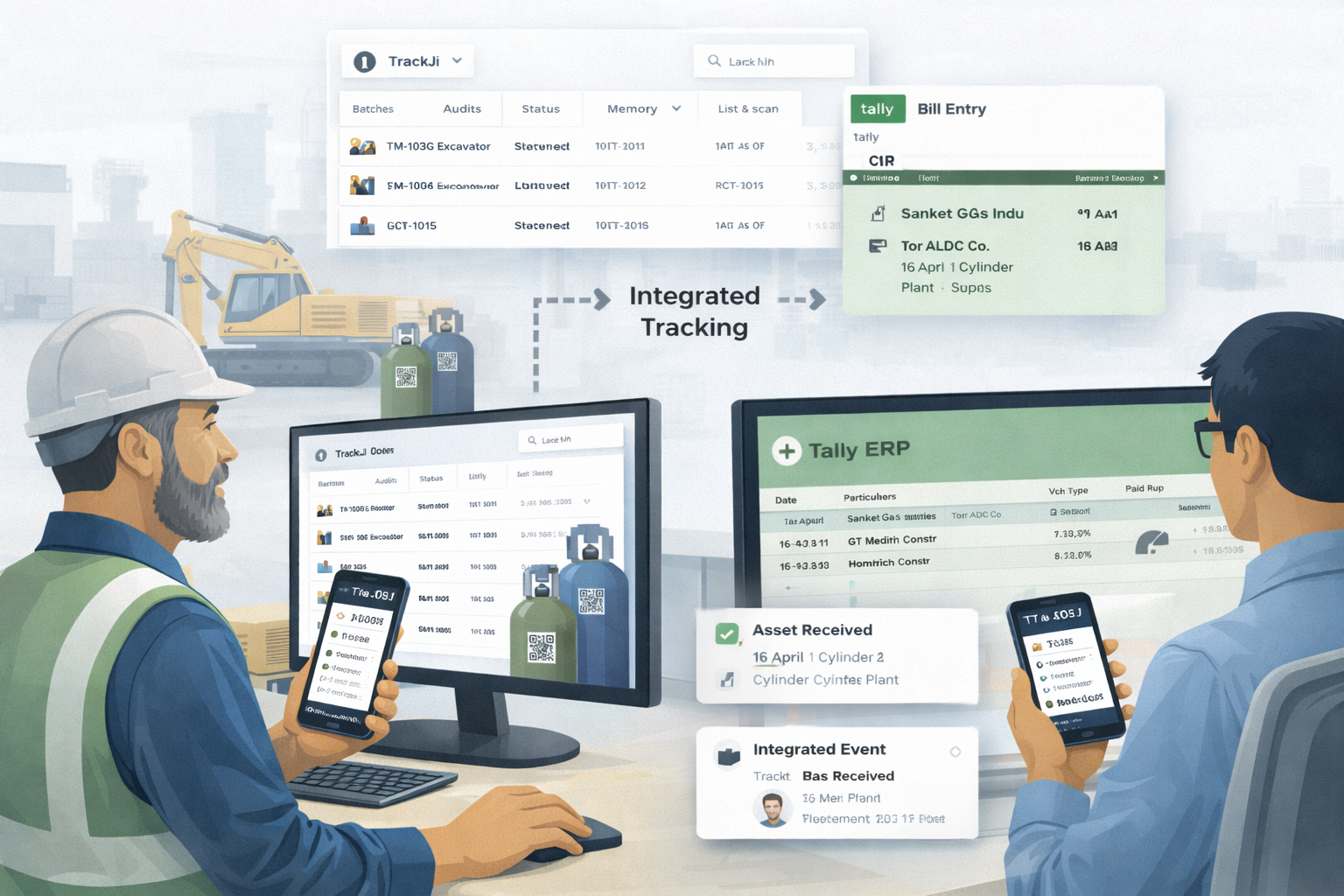
TrackJi is designed as an ERP-adjacent platform that helps businesses add industrial asset traceability beside Tally-driven workflows. Track identity, movement, lifecycle, and operational visibility without trying to replace your broader accounting or business system.
What is Tally asset tracking integration?
Tally asset tracking integration means adding a dedicated asset traceability layer beside Tally-based workflows so physical assets can be tracked more effectively. This is useful when finance and business records exist, but operational asset visibility is still fragmented, manual, or outside a structured system.
Why this matters in India
Many businesses already rely on Tally for core financial and business workflows. However, asset traceability, movement history, field accountability, and lifecycle visibility often remain outside a dedicated operational platform.
TrackJi complements broader business systems instead of competing with them.
Bring structure to asset workflows that accounting systems do not fully model.
Support businesses that want traceability aligned to existing tools.
TrackJi’s role beside Tally workflows
TrackJi focuses on asset identity, movement, lifecycle history, and operational visibility while fitting beside existing Tally-based business processes. Instead of trying to become a full replacement, it addresses the traceability layer that many industrial teams still need.
This makes it useful for organizations that want better asset control without disrupting existing business software habits.
Where Tally-adjacent asset tracking helps
Cylinder operations: Add movement and return visibility beyond core business entries.
Equipment workflows: Track location, custody, and status changes more clearly.
Returnable assets: Monitor repeated loop movements and accountability.
Warehouse and depot workflows: Improve issue, receipt, and handling records.
Industrial reporting: Add traceability structure around existing systems.
Benefits of this approach
No forced replacement: Keep Tally for broader business workflows.
Better traceability: Add asset identity and lifecycle history where needed.
Operational fit: Support real industrial workflows instead of only accounting logic.
Scannable workflows: Move toward QR-based asset records and movement logging.
Controlled adoption: Improve asset clarity without overcomplicating operations.
Frequently asked questions
What is Tally asset tracking integration?
It means adding a dedicated asset tracking and traceability layer beside Tally-driven business workflows.
Does TrackJi replace Tally?
No. TrackJi is positioned as an ERP-adjacent platform that complements broader business systems.
Why do businesses need this beside Tally?
Because asset movement, lifecycle visibility, and operational traceability often need more structure than standard accounting workflows provide.
What does TrackJi add?
TrackJi adds asset identity, movement history, lifecycle records, scan-based tracking, and operational clarity.
Need TrackJi beside Tally-based operations?
We can discuss workflow fit, reporting expectations, and how to structure asset traceability around your current setup.
Related pages: Industrial Asset Tracking, Asset Traceability System, Request Demo