QR Code Asset Tracking Software for Industrial Assets
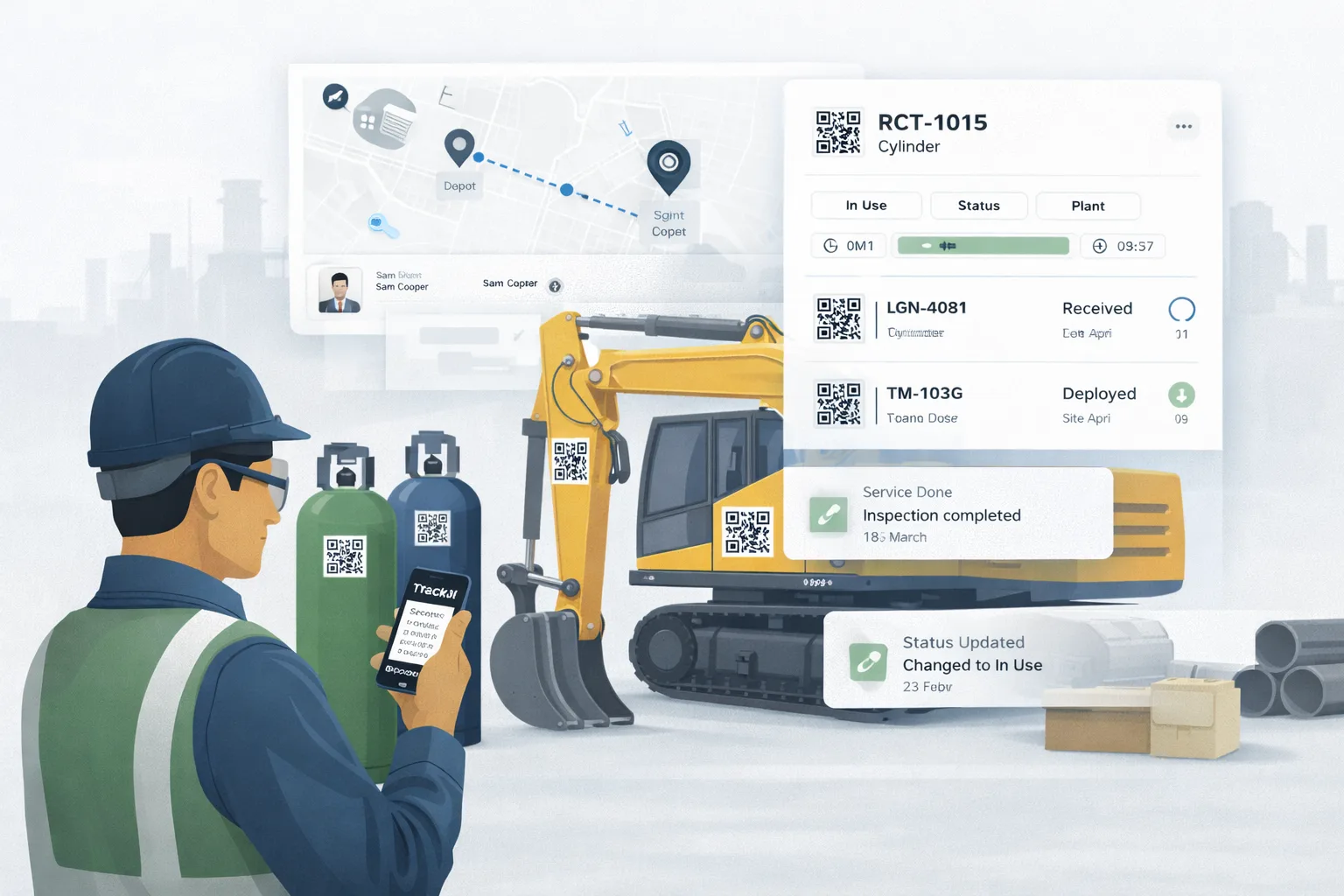
TrackJi is QR asset tracking software built for industrial operations that need fast scanning, reliable asset identification, movement visibility, and lifecycle traceability. Assign a unique QR code to each asset, scan it across operational stages, and maintain a structured history of location, status, dispatch, receipt, inspection, and verification events.
What is QR code asset tracking software?
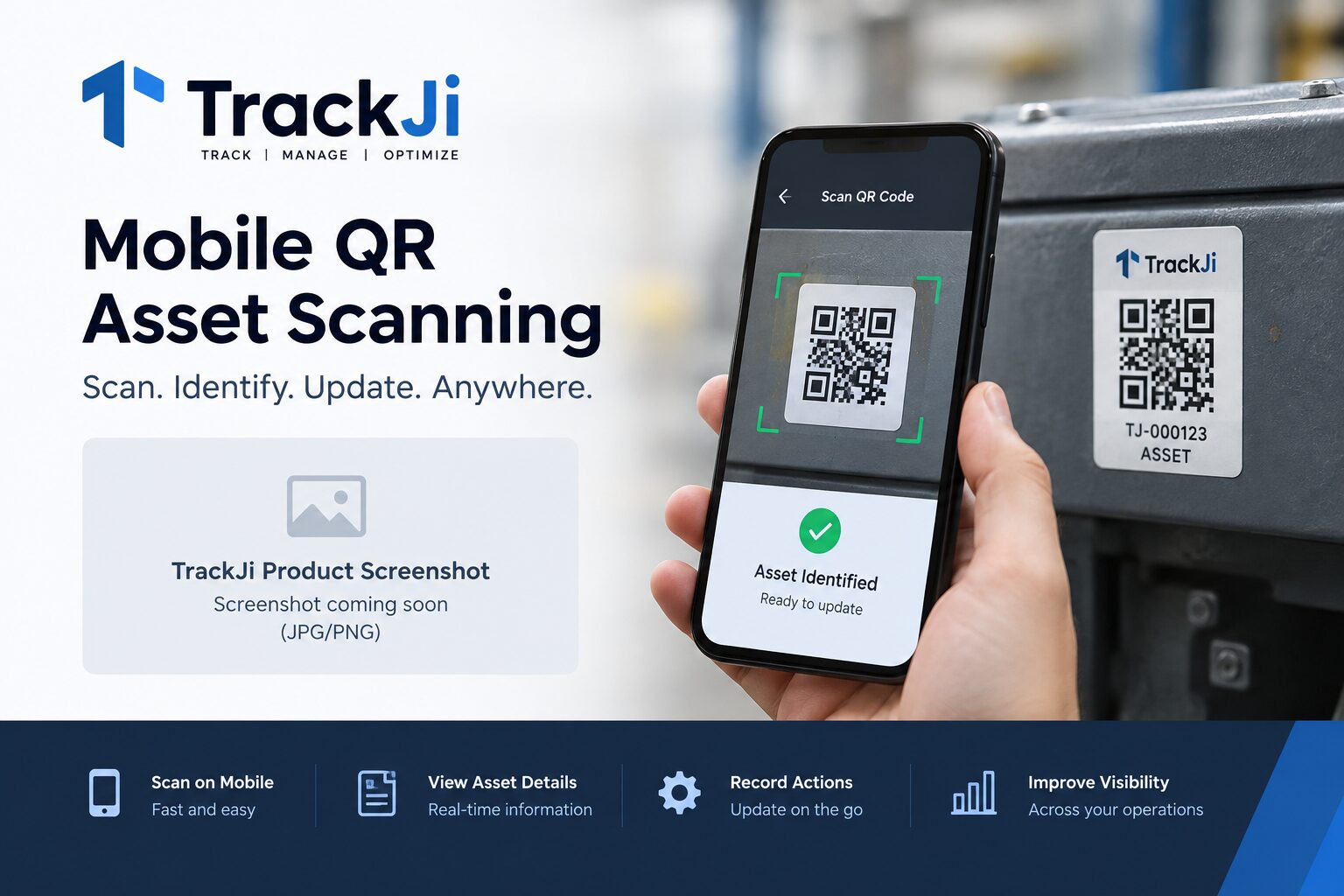
QR code asset tracking software connects a unique QR code on a physical asset with its digital record. When a worker scans the QR code, the software identifies the asset and can record an operational action such as receipt, issue, transfer, inspection, maintenance, return, or verification.
TrackJi is built for this type of scan-driven industrial asset tracking. It combines QR identification, mobile scanning, configurable workflow actions, movement history, and lifecycle traceability in one system.
What is QR asset tracking?
QR asset tracking is a method of identifying and monitoring physical assets using a unique QR code linked to a digital asset record. Each scan can trigger an update such as issue, receive, transfer, inspection, maintenance, return, or verification, creating a traceable asset history.
Why use QR codes for asset tracking?
QR codes are practical for industrial asset tracking because they are low cost, easy to print or engrave, simple to scan, and suitable for high-volume deployments. They help teams capture operational events quickly without requiring complex hardware at every workflow point.
Give every asset a unique QR-linked record so teams can identify, verify, and retrieve asset data instantly.
Record dispatch, receipt, transfer, inspection, stage completion, and field updates with fast QR scans.
Build a structured audit trail of asset movement, usage, condition, and status over time.
How TrackJi supports QR-based asset tracking
TrackJi is more than a QR code generator. It is the software layer that converts each QR scan into a meaningful operational event. Instead of treating the QR code as only a label, TrackJi connects every scan to an asset profile, workflow stage, user action, timestamp, and asset history record.
This helps industrial teams improve asset visibility, reduce manual errors, speed up field updates, and maintain more reliable operational records across the asset lifecycle.
Common QR asset tracking use cases
Industrial equipment tracking: Identify and monitor machines, tools, and plant assets with scan-based records.
Gas cylinder tracking: Track cylinder movement, issue, return, refill, inspection, and verification stages.
Mobile asset tracking: Let field teams identify assets and record operational actions using mobile scanning.
Asset lifecycle tracking: Follow assets through operational stages, maintenance, return, and other lifecycle events.
Asset traceability: Maintain structured movement, status, inspection, and audit records for physical assets.
Operational benefits of QR asset tracking software
Faster asset lookup: Retrieve asset information quickly through QR scanning.
Improved data accuracy: Reduce manual entry dependency and capture events directly from the field.
Better movement visibility: Understand where assets are, where they moved, and what changed.
Lifecycle traceability: Build a structured record of each asset across operational events.
Scalable deployment: Expand asset tracking across locations, teams, and large asset volumes.
How a QR asset tracking workflow works
A typical QR asset tracking workflow starts by assigning a unique identity to each asset. The QR code is then printed, engraved, or attached using a suitable label or tag. As the asset moves through operations, teams scan the code to record key events such as issue, transfer, loading, unloading, inspection, verification, maintenance, or return.
Over time, these repeated QR scan events create a reliable digital history that helps organizations monitor asset status, improve accountability, and maintain better operational control.
Assign a unique QR code to each asset and create its digital profile.
Capture operational events using QR scans at key workflow points.
Review asset history, status changes, and movement records from one system.
TrackJi QR asset tracking software at a glance
Asset identity: Give every physical asset a unique QR-linked digital record.
Mobile scanning: Scan assets from phones or compatible QR scanning devices.
Process actions: Record operational actions instead of only reading a QR code.
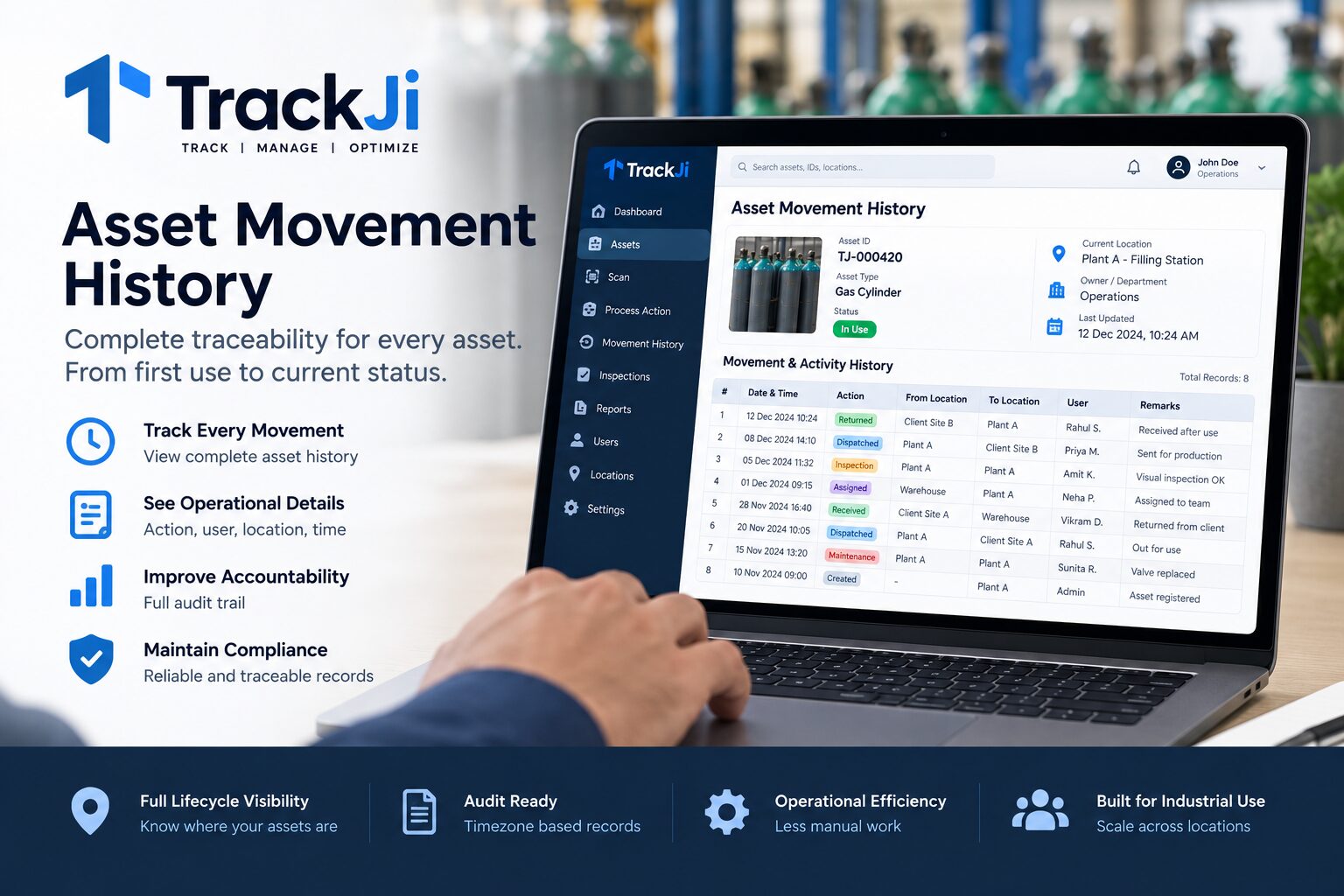
Movement history: Maintain a chronological record of asset movement and status changes.
Lifecycle tracking: Follow an asset across receipt, inspection, use, return, maintenance and other configured stages.
Inspection and audit trail: Associate operational events and verification records with the asset.
Bulk operations: Support scan-intensive workflows involving large numbers of industrial assets.
Pricing: TrackJi includes a free plan for up to 1,000 active assets.
Example: how an industrial asset moves through TrackJi
Consider a reusable industrial cylinder with asset ID C100042. The cylinder is registered in TrackJi and assigned its own QR identity. An operator scans the QR code whenever an operational event needs to be recorded.
Scan the QR code and retrieve the correct asset record.
Record a process action such as received, inspected, assigned, returned, transferred, or maintained.
TrackJi preserves the resulting status, movement and operational history against that asset.
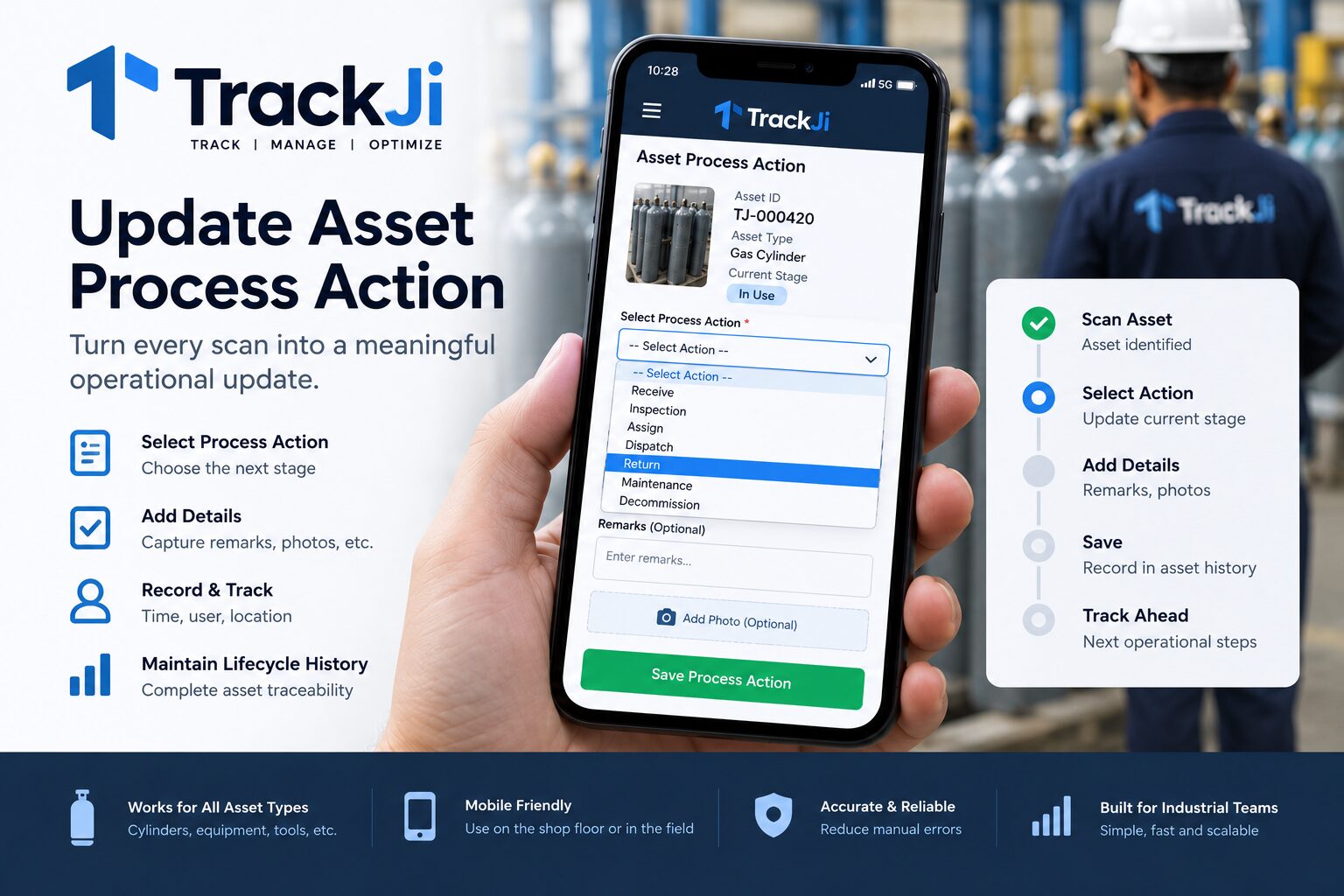
The result is a digital history of the physical asset rather than a standalone QR code or static asset label.
QR codes for industrial assets
Industrial asset tracking often requires more than basic office labels. Depending on the environment, QR codes may need to be applied on durable labels, metal tags, or other fit-for-purpose identification media. TrackJi works as the digital tracking layer behind these asset identities, helping teams use scan-based traceability in real operational settings.
For organizations evaluating robust tagging options, QR tracking software becomes most useful when the asset identity, scan process, and record system are designed together.
Why TrackJi for QR asset tracking software?
TrackJi is designed for organizations that need structured asset traceability instead of disconnected scan data. It helps turn QR codes into operational control points by linking asset identity with scan events, workflow logic, and lifecycle records.
Whether you are planning QR tracking for cylinders, tools, industrial equipment, returnable assets, or field inventory, TrackJi can help structure the workflow around real operating conditions.
Frequently asked questions
Is TrackJi only a QR code generator?
No. TrackJi is asset tracking software that uses QR-based identity to support scan-driven workflows, movement tracking, and lifecycle traceability.
Can QR codes be used for industrial asset tracking?
Yes. QR codes are widely used for industrial asset tracking because they are practical, scalable, and easy to scan. The best results come when the QR label or tag and the software workflow are planned together.
What can be recorded from a QR scan?
A QR scan can record events such as asset issue, receipt, transfer, inspection, status updates, maintenance, verification, and other operational activities linked to the asset record.
Who is QR asset tracking useful for?
QR asset tracking is useful for manufacturers, warehouses, industrial service teams, cylinder operators, field operations, maintenance teams, and organizations that need better asset visibility and traceability.
What is the difference between a QR code generator and QR asset tracking software?
A QR code generator creates the code itself. QR asset tracking software connects that QR identity to an asset record, operational workflow, scan events, status changes, movement history, inspections, and other lifecycle information. TrackJi provides this software layer behind the QR code.
Can TrackJi track returnable industrial assets?
Yes. TrackJi can be configured for reusable and returnable assets such as cylinders, containers, tools, industrial equipment, and other serialized assets that repeatedly move between operational stages or locations.
Does TrackJi require RFID or GPS hardware?
No. A QR-based TrackJi deployment can operate using unique QR identities and scan events without requiring RFID or GPS hardware on every asset. Other identification or sensing approaches may be used where the operating requirement calls for them.
Planning a QR-based asset tracking workflow?
We can help map your assets, scan points, identification method, and traceability requirements into a working TrackJi setup.