Sensor-Enabled Asset Tracking for Industry 4.0-Ready Industrial Workflows
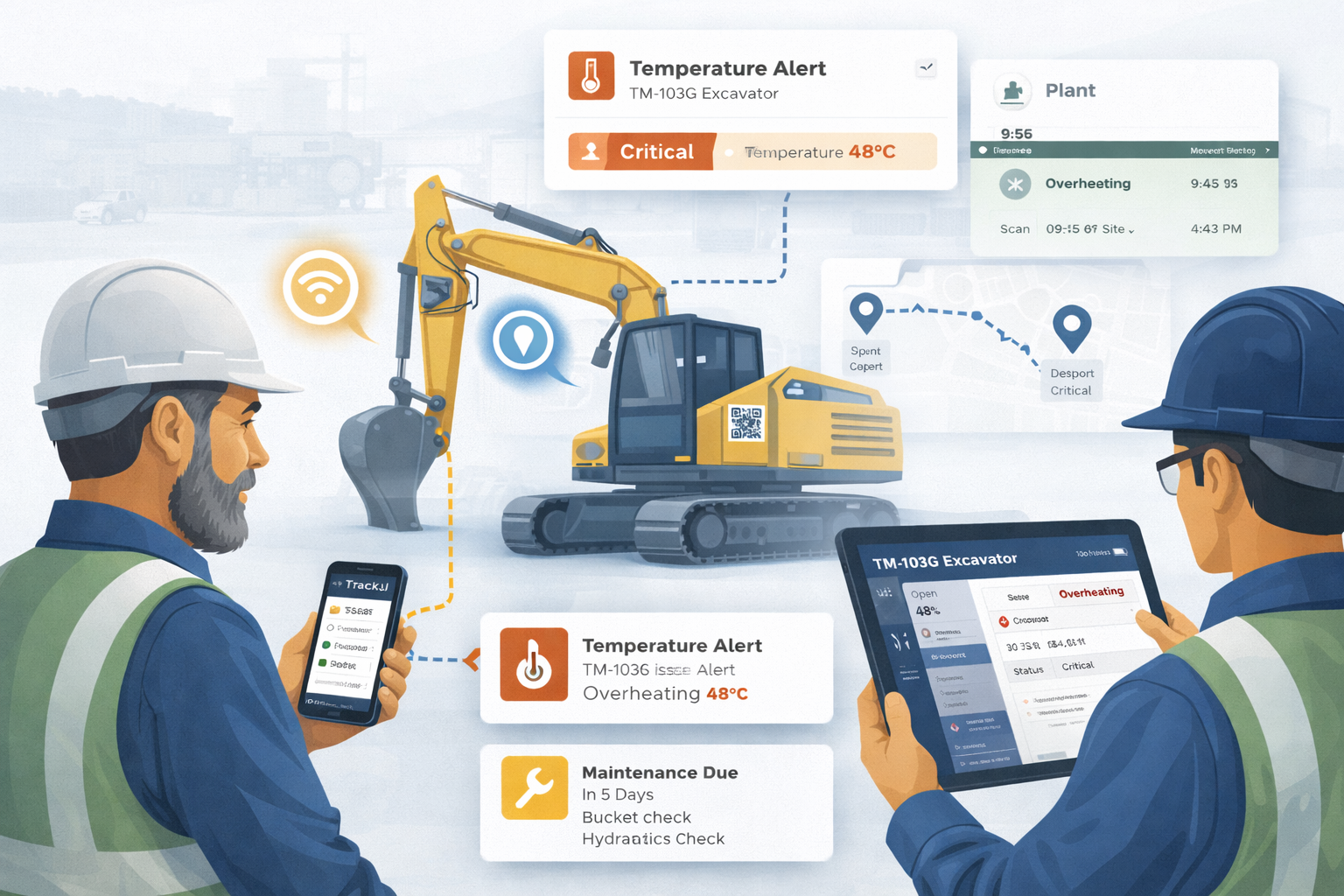
TrackJi supports a modular path toward sensor-enabled asset tracking where operations need additional visibility such as weight-linked events, checkpoint capture, or process-linked signals. Extend core asset traceability with optional data layers without making sensors a compulsory dependency.
What is sensor-enabled asset tracking?
Sensor-enabled asset tracking extends normal asset traceability by linking additional signals to asset records. This can include events such as weight-linked changes, checkpoint confirmation, or process-stage signals that provide richer operational context.
Optional, not mandatory
TrackJi remains useful as a QR and lifecycle traceability platform even without sensors. Sensor-linked data is an extension layer, not a mandatory starting point. This keeps the core platform practical while allowing future expansion.
Useful for cylinders, returnables, or process-sensitive assets.
Track events at specific stages or operational nodes.
Support digitally transforming plants without overcomplicating the core platform.
Why teams ask for sensor-linked visibility
Some industrial buyers want richer operational context around specific events or checkpoints. They may want to know not just that an asset was scanned, but also whether it crossed a defined checkpoint, matched a process signal, or carried a linked weight or condition record at that stage.
This is where sensor-linked asset tracking can complement normal identity and lifecycle history.
Where sensor-linked tracking can help
Cylinder workflows: Add weight or checkpoint-linked event context.
Process-sensitive assets: Capture specific operational node events.
Returnables: Improve movement confirmation through defined checkpoints.
Industry 4.0 projects: Support digital transformation narratives with practical data layers.
Hybrid workflows: Start with QR identity and extend only where needed.
Benefits of a modular approach
Lower complexity: Keep the core tracking system simple.
Future-ready design: Add sensor-linked data where real value exists.
Better reporting context: Link asset history with additional operational signals.
Practical deployment: Avoid overengineering from day one.
Industry alignment: Support Industry 4.0-ready narratives with controlled implementation.
Frequently asked questions
What is sensor-enabled asset tracking?
It is asset tracking that includes optional sensor-linked signals such as checkpoint events, weight-linked data, or process-linked readings.
Does TrackJi require sensors?
No. TrackJi works as a QR-based asset tracking and lifecycle platform even without sensors. Sensors are optional.
Why do teams want sensor-linked workflows?
They may want more process visibility, better operational context, or Industry 4.0-style reporting around specific events.
What kinds of data can be linked?
Weight-based events, checkpoint capture, and other process-linked signals can be connected to asset history where needed.
Exploring sensor-linked asset workflows?
We can discuss whether your use case needs QR-only traceability or a modular sensor-ready extension path.
Related pages: Mobile Asset Tracking App, QR Asset Tracking Software, Industrial Asset Tracking