Asset Traceability System for Industrial Assets and Equipment
TrackJi helps industrial teams trace physical assets through unique identity, QR scanning, process actions, movement history, user-linked updates, and lifecycle records. Build a structured history of equipment, cylinders, tools, containers, and returnable assets across plant, depot, field, service, inspection, and return workflows.
What is an asset traceability system?
An asset traceability system is used to identify physical assets, record where they move, monitor status changes, and preserve a verifiable history of operational events. Instead of relying on informal notes or disconnected spreadsheets, teams maintain a structured lifecycle record that can be reviewed later.
Why asset traceability matters
Industrial teams need asset traceability to reduce disputes, improve accountability, support compliance, and bring order to movement-heavy workflows. When assets are issued, transferred, serviced, returned, inspected, or verified, a proper traceability system helps preserve operational clarity.
Each asset has a defined record linked to a scannable identifier or unique asset code.
Movement, stage, and operational updates form a structured asset timeline.
User, time, and event-linked logs help create a more defensible record.
How asset traceability works in TrackJi
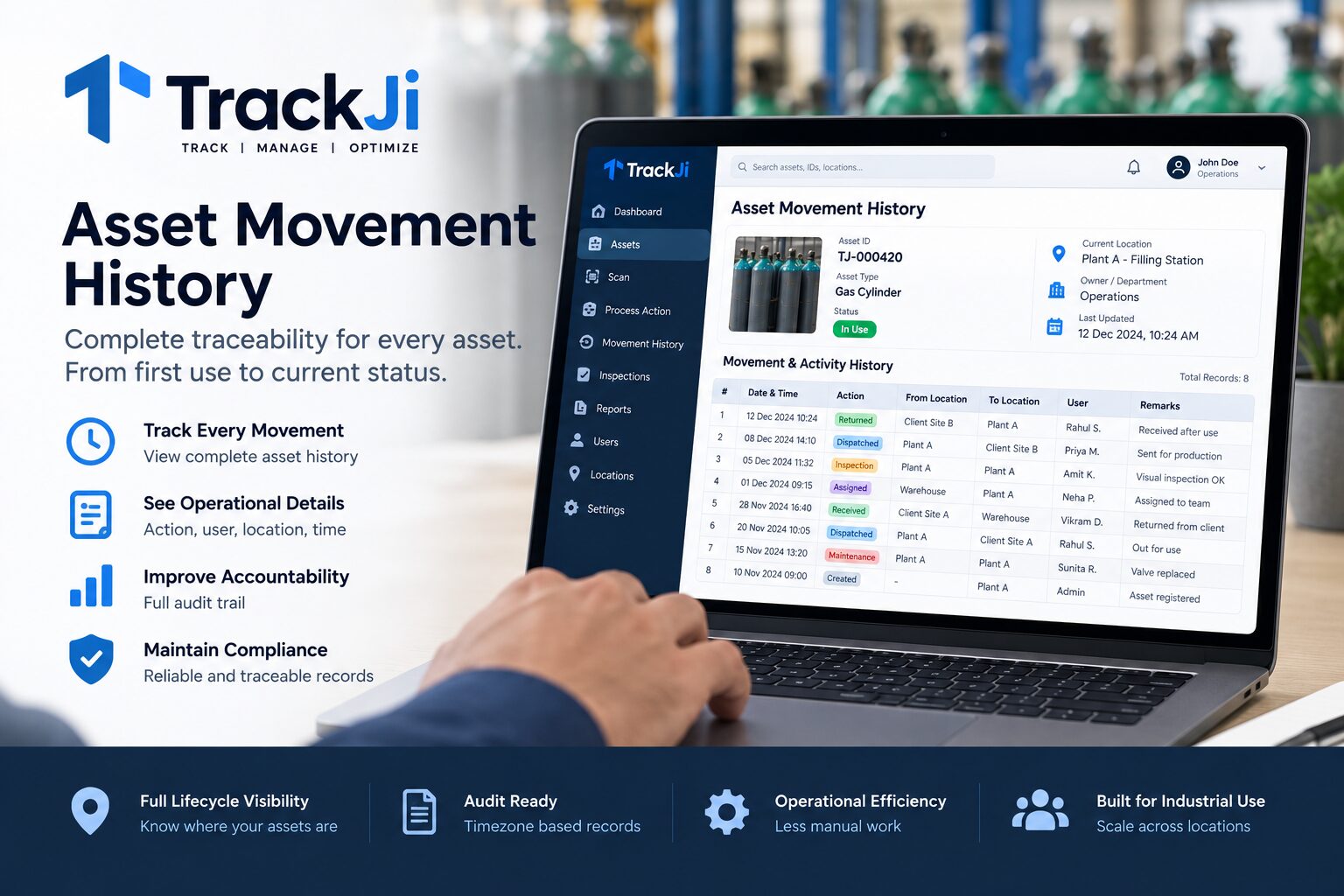
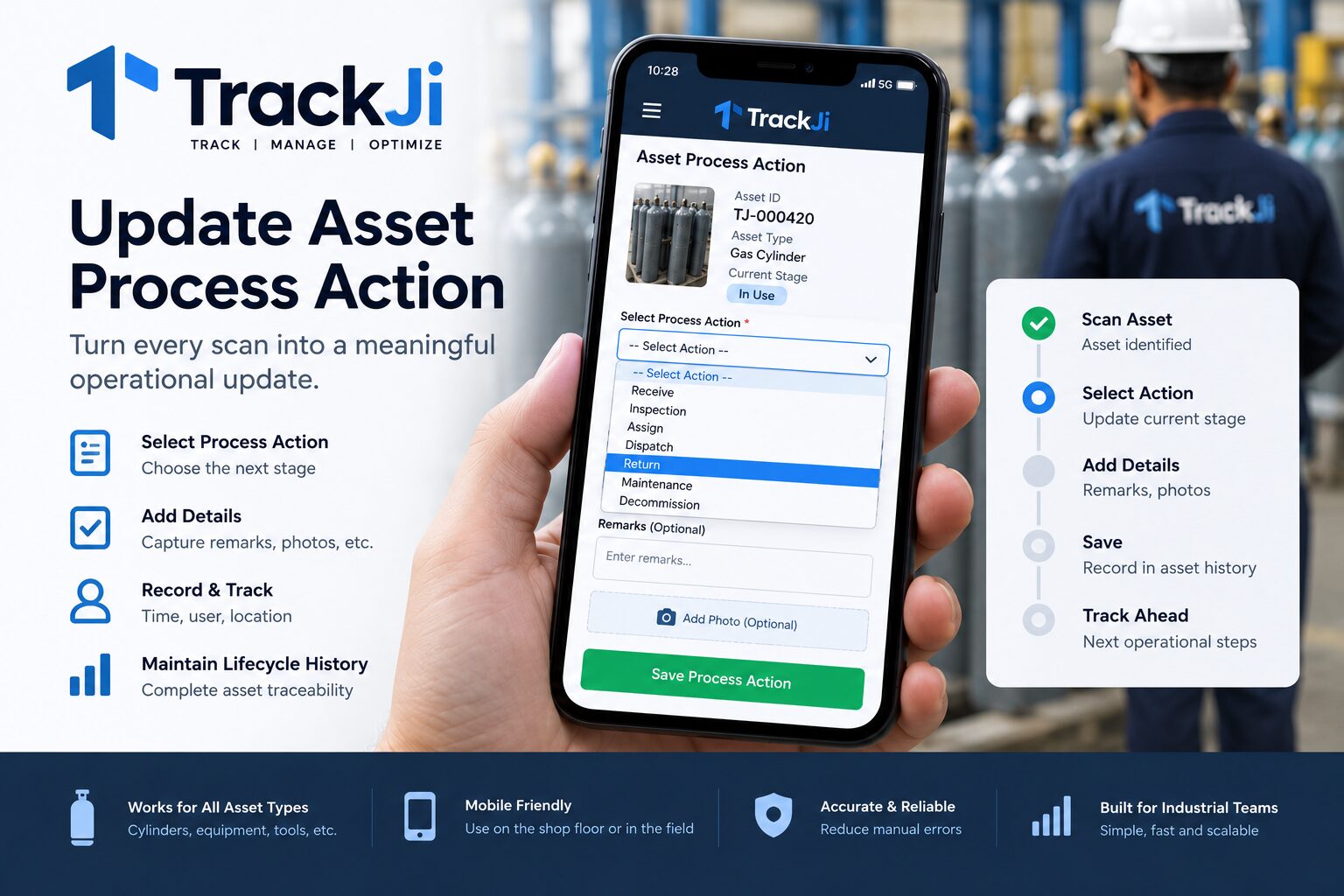
Traceability begins with a unique asset identity. When an operator scans the asset and performs a permitted process action, TrackJi records the event against that asset. Repeated events build a history that can later show what happened, when it happened, and which recorded user performed the action.
Open the correct physical asset record using its QR code or configured identifier.
Capture the permitted movement, status, inspection, return, maintenance, or other process event.
Review accumulated movement and lifecycle records to understand the asset's operational history.
What an industrial asset traceability system records
Asset identity: A unique asset record linked to QR, code, or tag-based identity.
Movement history: Transfers, dispatch, receipt, return, and location-linked changes.
Status updates: Operational stage, condition, inspection, service, or availability.
User actions: Who scanned, verified, updated, or completed the event.
Audit trail: Timestamped lifecycle records that can be reviewed later.
Where traceability systems are useful
Industrial gas: Cylinder movement, return, refill, and verification workflows.
Manufacturing: Equipment tracking, line-side assets, and process-stage visibility.
Returnables: Reusable bins, racks, pallets, and movement loops.
Field operations: Assets moving between depot, site, and service environments.
Compliance-led use cases: Better reporting and defensible records.
How TrackJi supports industrial asset traceability
TrackJi connects physical asset identification with operational events. Instead of keeping identity, movement, inspection, service, and return information in disconnected records, teams can preserve these events against the asset's structured history.
This is useful where assets repeatedly move between plants, depots, users, customers, service locations, or process stages and the organization needs to review what happened over time.
TrackJi includes a free plan for up to 1,000 active assets, with unlimited users across the current standard plans.
TrackJi asset traceability at a glance
Identity: Maintain a unique record for each physical asset.
Scanning: Use QR-based mobile scanning to retrieve asset records.
Events: Record configured process actions against the asset.
Movement: Preserve dispatch, receipt, transfer, and return history.
Verification: Keep user-linked and timestamped operational updates.
Lifecycle: Preserve inspection, maintenance, status, and other lifecycle events.
Review: Use structured history for reporting, traceability, and audit review.
Entry plan: Free for up to 1,000 active assets.
Frequently asked questions
What is an asset traceability system?
It is a system that helps identify assets, record movement and status changes, and maintain a verifiable lifecycle history.
Why is asset traceability important?
It improves accountability, reduces disputes, supports compliance, and helps organizations review what happened to an asset over time.
What data is typically tracked?
Asset identity, movement history, stage changes, user-attributed actions, timestamps, and verification events are commonly tracked.
Can TrackJi help with audit-ready asset records?
Yes. TrackJi supports structured lifecycle records that help industrial teams build more verifiable and reviewable asset histories.
Can QR codes be used for industrial asset traceability?
Yes. A QR code can provide a scannable identity for an industrial asset. In TrackJi, scanning that identity can open the asset record and connect operational actions to its movement and lifecycle history.
What is the difference between asset tracking and asset traceability?
Asset tracking often focuses on the current identity, location, or status of an asset. Asset traceability also preserves the sequence of recorded events so teams can review what happened to the asset over time.
Need stronger traceability for industrial assets?
TrackJi helps move operations from informal tracking to structured, verifiable asset records.