Asset Lifecycle Tracking & Management Software for Industrial Assets
TrackJi helps industrial teams track an asset across its operational lifecycle—from identification and issue through movement, usage, inspection, maintenance, return, and retirement. Each recorded event contributes to a structured lifecycle history for operational visibility and traceability.
What is asset lifecycle tracking?
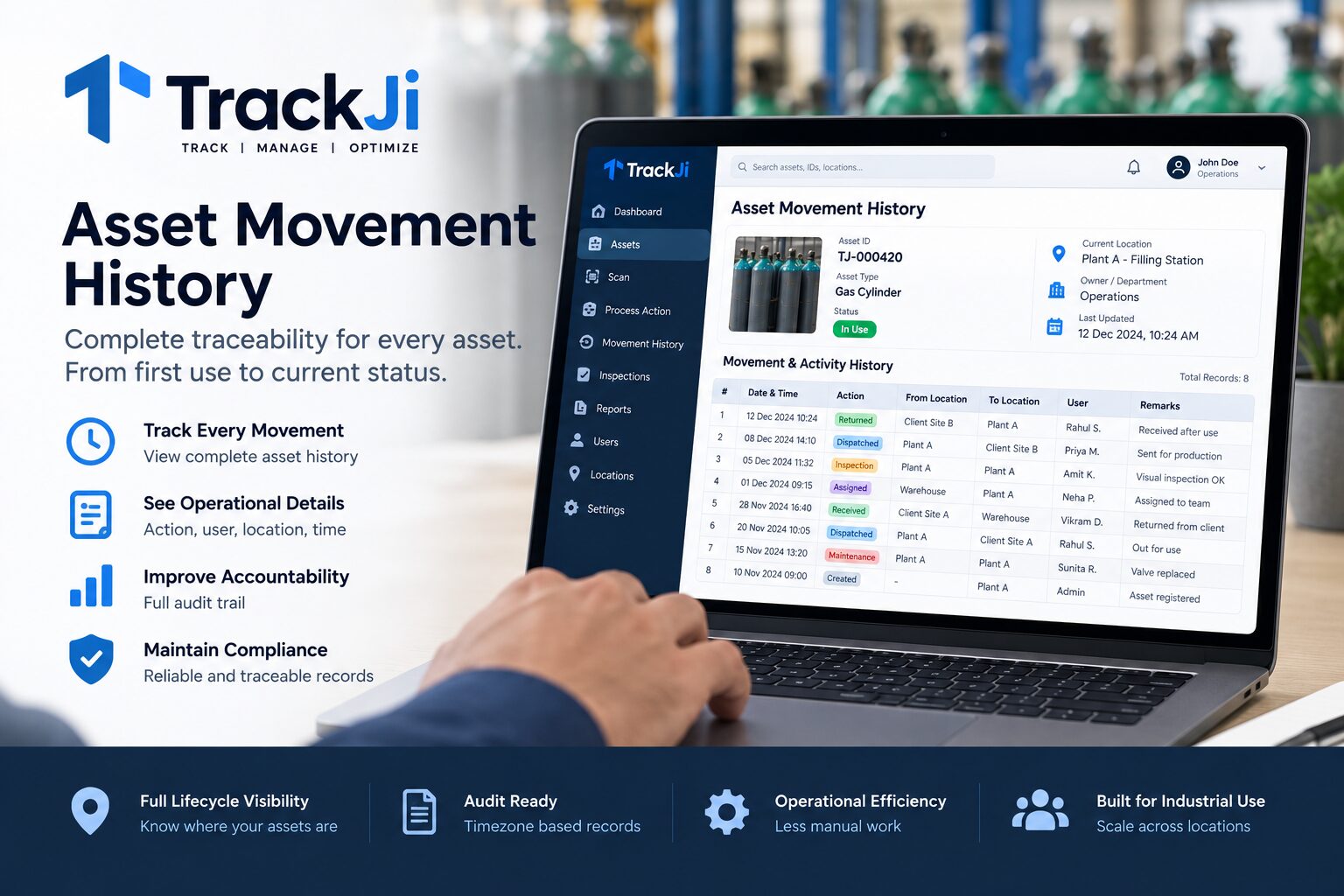
Asset lifecycle tracking is the process of recording what happens to an asset from identification or onboarding through movement, usage, inspection, maintenance, return, and eventual retirement. Instead of keeping only a current inventory record, lifecycle tracking preserves the sequence of operational events that occurred over time.
Why lifecycle management matters
Without lifecycle visibility, teams often lose clarity about where an asset moved, what happened to it, who updated it, and whether it was inspected, serviced, or verified. Structured lifecycle tracking helps reduce confusion and improve operational control.
Create a unique asset record linked to QR, code, or tag-based identity.
Track issue, transfer, usage, inspection, maintenance, return, and status changes.
Maintain a structured record of asset history for accountability and review.
How asset lifecycle tracking works in TrackJi
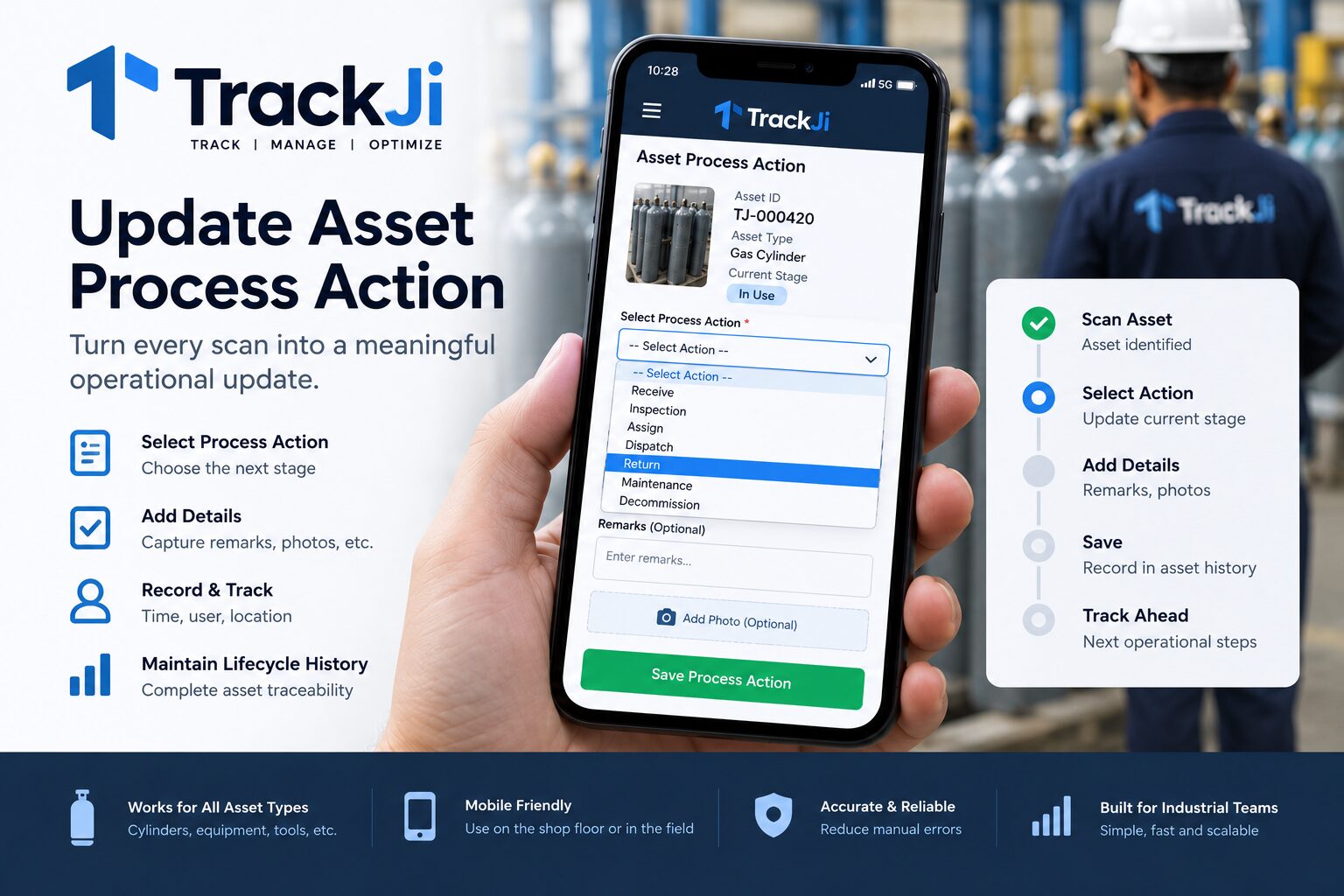
Each asset has a unique identity. When an operator scans or updates the asset and performs a permitted process action, TrackJi records the event against that asset. Over time, these events build a lifecycle history instead of leaving teams with only the asset's latest status.
Open the correct asset record using its QR code or configured identifier.
Capture the permitted movement, status, inspection, maintenance, return, or other process action.
Preserve recorded events over time for lifecycle visibility, reporting, and traceability.
Common lifecycle stages
Asset creation: Create the initial asset record and identity.
Tagging and onboarding: Assign QR, metal tag, or identification method.
Issue and movement: Record transfers between locations, users, or stages.
Inspection and maintenance: Track condition checks, service, and verification events.
Return or retirement: Preserve the end-of-life or return history.
Benefits of lifecycle visibility
Better asset control: Understand what happened over time.
Improved accountability: Link operational changes to users and timestamps.
Clearer maintenance history: Preserve inspection and service records.
Reduced disputes: Maintain a defensible record of movement and status.
Operational traceability: Support review, reporting, and audits.
TrackJi asset lifecycle tracking at a glance
Identity: Maintain a unique record for each tracked asset.
Movement: Preserve movement and transfer events over time.
Status: Track lifecycle stages and configured process actions.
Inspection: Record verification and inspection activity.
Maintenance: Keep service and maintenance events connected to the asset.
Return: Track returnable assets through repeated operational cycles.
Traceability: Retain user-linked lifecycle history for review and reporting.
Entry plan: Free for up to 1,000 active assets.
Frequently asked questions
What is asset lifecycle management software?
It is software used to manage assets across identity, movement, usage, inspection, maintenance, and return or retirement stages.
Why is lifecycle visibility important?
It helps teams understand where assets are, what changed, what condition they are in, and what actions happened over time.
What stages can be tracked?
Creation, tagging, issue, transfer, usage, inspection, maintenance, verification, return, and retirement can all be tracked.
Can TrackJi support lifecycle traceability?
Yes. TrackJi supports structured lifecycle records with asset identity, movement logs, status history, and user-linked updates.
What is the difference between asset tracking and asset lifecycle tracking?
Asset tracking often focuses on identifying an asset and its current location or status. Asset lifecycle tracking also preserves the sequence of operational events such as issue, movement, inspection, maintenance, return, and retirement over time.
Can TrackJi track returnable assets through multiple lifecycle cycles?
Yes. TrackJi can preserve repeated movement and process events for returnable assets as they move through configured operational cycles.
Need better asset lifecycle visibility?
TrackJi helps structure asset history across movement, service, verification, and operational workflows.
Related pages: Asset Traceability System, Industrial Asset Tracking, QR Asset Tracking Software